

08 Jan The Science Behind Ski and Snowboard Tuning
The Science Behind Ski and Snowboard Tuning
Whether you’re carving first chair corduroy or weaving through spring slush, that smooth, confident ride is powered by more than good technique. It’s science—carefully managed friction, precise geometry, and tuned materials—working together beneath your feet. Here’s what’s really happening when you glide, and how a professional tune makes your skis or snowboard perform their best in Breckenridge’s ever-changing conditions.
Glide is controlled friction
Snow is a complex surface. The resistance you feel as you slide has three main parts:
– Dry friction: Microscopic contact points between base material and snow crystals.
– Plowing: The effort needed to push snow out of the way as you move.
– Water film drag: As you glide, pressure and slight friction melt a micro-thin film of water under your base. Too much water, and suction slows you down; too little, and sharp crystals grab your base and edges.
The goal of tuning is to balance these forces so you get speed on the flats, grip on ice, and a predictable feel through every turn.
Base material and structure
Most performance skis and boards use sintered polyethylene (UHMW-PE). It’s porous, which means it can absorb wax deeply and glide faster than extruded bases. But it also needs regular care.
– Flatness: A flat base tracks straight, carves consistently, and puts edge angles to work. If the base is convex or concave, the ski or board can feel squirrely, hooky, or slow. Technicians check flatness with a true bar and correct it with a stone grind.
– Structure: The grind pattern on your base is not just cosmetic. Tiny grooves channel the water film under your base to reduce suction.
– Fine, linear structures run fast in cold, dry Colorado midwinter.
– Medium, mixed structures balance speed and control for most days.
– Coarser or broken patterns help release water in warm, wet spring snow.
The right structure for the day can be the difference between flying across sticky flats and getting glued down.
Edge geometry = grip and control
Edges are your steering tools. Their angles and finish determine how confidently you hold on hardpack and ice.
– Base bevel: A tiny lift (commonly around 0.5–1 degree) keeps edges from feeling grabby when you’re flat. Too little bevel and the ride is twitchy; too much and you’ll struggle to engage an edge.
– Side edge angle: Sharpening to 2–3 degrees increases bite on firm snow. A more acute angle offers incredible hold but requires more frequent maintenance.
– Detune: Slightly softening the very tips and tails prevents hookiness and makes turn initiation smoother, especially for freestyle and all-mountain riding.
Sharp, polished edges slice the snow rather than tearing through it, improving grip and reducing chatter.
Wax chemistry and snow temperature
Wax reduces the surface energy of your base, making it more hydrophobic so water beads and releases. It also fills the base pores, smoothing microscopic roughness.
– Temperature-specific wax: Colder waxes are harder to resist abrasion from sharp, dry crystals. Warmer waxes are softer and help manage the thicker water film in spring conditions.
– Fluoro-free momentum: Modern hydrocarbon and plant-based waxes are designed to be fast, durable, and more eco-conscious. For most skiers and riders, these are ideal for daily use.
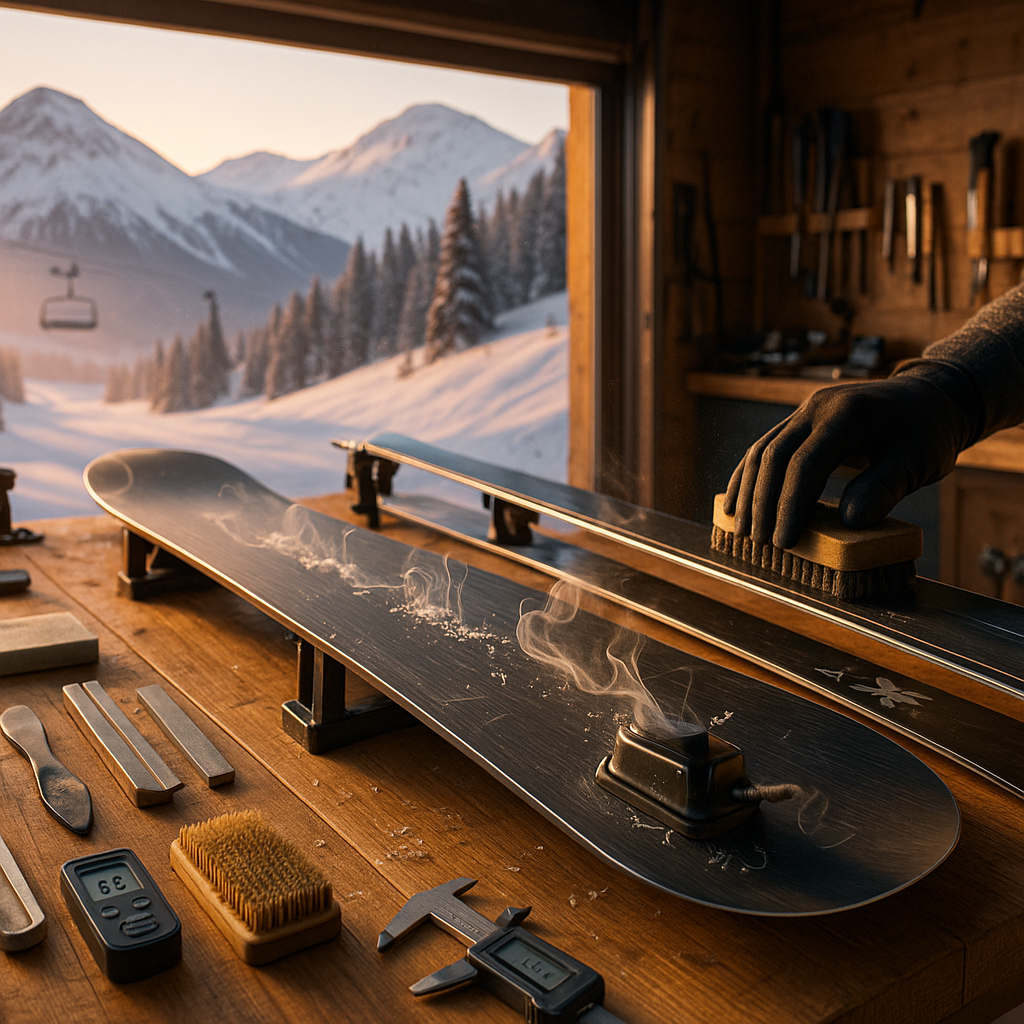
– Application method matters: Hot waxing with an iron penetrates the base and lasts longer than rub-on options. Proper cooling, scraping, and brushing align the wax with your base structure for maximum speed.
In our dry, high-altitude climate, a good hot wax can transform how lively and fast your gear feels.
Repair and longevity
The strongest tune starts with a sound base:
– P-Tex repairs: Burns or gouges get filled and leveled. For deeper “core shots,” technicians bond a tougher material before finishing to restore strength.
– De-burring: Rocks and hard impacts create microscopic burrs that make edges feel dull and chattery. Files, diamond stones, and gummi stones remove them and polish the finish.
– Oxidation: A chalky white look on your base means it’s dry and oxidized—wax can’t bond well until the surface is refreshed with a light grind or thorough hot-scrape and re-wax.
Regular tuning prevents small issues from becoming expensive damage and keeps your equipment performing season after season.
Breckenridge conditions: why local tuning matters
Our snowpack and weather swing from:
– Early season abrasive manmade snow that quickly rounds edges.
– Midwinter cold, dry powder where sharp edges and fine structure excel.
– Freeze-thaw spring cycles that demand a warmer wax and coarser structure to cut suction.
Because the snow changes, your tune should evolve with it. That’s the advantage of a local, conditions-based approach.
How often should you tune?
It depends on how much you ride and the conditions. As a general guide:
– Wax every 2–4 days on snow in midwinter; every 1–3 days in spring slush.
– Sharpen edges every 3–5 days in firm conditions or any time you feel slip on hardpack.
– Get a full tune after 5–10 days on snow, sooner if you notice base damage, rock hits, or inconsistent performance.
– After any core shot or major impact, bring it in immediately to prevent moisture from reaching the core.
Signs you need a tune
– Your bases look gray or fuzzy instead of dark and smooth.
– You’re sticking on cat tracks or flats while others pull away.
– Edges feel rounded to the touch or won’t hold on firm snow.
– The ride feels grabby, hooky, or unpredictable.
– You see gouges or feel raised scratches under your fingers.
What a professional tune includes at Alpine Sports
As a family owned full-service ski, snowboard, bike, and stand-up paddle board shop with two convenient locations on the north and south ends of Breckenridge, Alpine Sports tunes gear for local conditions and real-world performance. A typical full tune may include:
– Inspection and base flatness check
– Base repairs with P-Tex and core-shot bonding as needed
– Stone grind to restore flatness and add the right structure for the season
– Precision edge work to your preferred base and side angles
– Edge polishing and detuning for smooth turn initiation
– Hot wax matched to forecast temperatures
– Scrape and multi-brush finish for speed and durability
– Final quality check so you leave ready to ride
Want a specific bevel, a race-ready polish, or a spring structure? Our techs can tailor the tune to your style and the day’s snow.
DIY vs. pro tuning
Tuning at home is a great way to maintain performance between shop visits, especially for wax and light edge touch-ups. But:
– Getting bases truly flat and structured requires shop-grade grinding equipment.
– Precise edge angles and polished finishes are easier and more consistent on professional machines.
– Repairs done with the right materials prevent water intrusion and delamination.
A simple routine works well: hot wax at home every few days, quick diamond-stone edge touch-ups when needed, and periodic professional full tunes to reset the base, structure, and edges.
Quick tips to keep your gear fast
– Dry your bases and edges after riding to prevent rust.
– Store gear at room temperature, not in a hot car or damp garage.
– Brush your base lightly before riding to refresh structure.
– After spring days, clean the base and re-wax to remove dirty water contaminants.
Ride better with the right tune
Ski and snowboard tuning isn’t guesswork—it’s applied physics that translates directly into more control, more speed, and more fun. Whether you’re chasing first tracks off the T-Bar or cruising family laps, the right wax, edge angles, and base structure help you make the most of every run.
Stop by Alpine Sports North or South in Breckenridge for a fast, condition-specific ski or snowboard tune, or visit alpinesportsrental.com to learn more. As a family owned shop, we’re here to keep your gear performing at its best—so you can focus on the next great turn.
Sorry, the comment form is closed at this time.