

09 Oct How to Choose the Right Ski Boots for Comfort and Performance
How to Choose the Right Ski Boots for Comfort and Performance
If you want to ski better and enjoy every run in Breckenridge, start with your ski boots. Skis matter, but boots are the direct connection between your body and the snow. The right pair will keep you warm, secure, and confident from first chair to last lap. The wrong pair can turn a bluebird day into a short, painful one.
At Alpine Sports Rental, our family-owned team has been fitting ski boots in Breckenridge for decades. Here’s how to choose the right boots—whether you’re renting for a few days or dialing in your setup for the season.
What a proper ski boot fit should feel like
– Snug, not painful: Expect a close, performance fit. Your toes should lightly brush the front of the liner when you stand upright. When you flex forward into a ski stance, your toes should pull back slightly with solid heel hold and no hot spots.
– Secure heel: Minimal heel lift is key for control. Your heel should stay planted when you flex and roll your ankles.
– Even pressure: No numbness or pinching across the instep or forefoot. Slight pressure is normal; sharp pain is not.
– Warm but not sweaty: Good circulation matters. Overly tight boots cut off blood flow and make you cold.
Understand flex: matching stiffness to you and the mountain
Flex index describes how stiff a boot is when you flex forward. There’s no universal standard, but these guidelines help:
– Beginner to cautious intermediate
– Men: 70–90 flex
– Women: 60–80 flex
– Why: Softer boots are forgiving, easier to control at slower speeds, and more comfortable as you learn.
– Solid intermediate to advanced
– Men: 90–110 flex
– Women: 70–100 flex
– Why: Added support improves edge hold and stability at moderate to higher speeds.
– Advanced to expert
– Men: 110–130+
– Women: 95–115+
– Why: Stiffer boots transmit energy quickly for powerful skiing on steeps, bumps, and firm snow.
Consider your weight, height, and how aggressively you ski. Also remember that cold temperatures (hello, high-altitude mornings) make boots feel stiffer, so a flex that’s perfect in the shop can feel firmer on the mountain.
Choose the right width and volume for your foot
Boot “last” is the width of the boot at the forefoot (measured in millimeters). It’s a helpful starting point:
– Narrow feet: 97–98 mm last
– Average feet: 100 mm last
– Wider feet: 102–104 mm last
Volume matters, too:
– High instep or tall arches: Look for boots with more instep height to avoid pressure and numbness.
– Wide forefoot, narrow heel: A medium-to-wide last with a well-shaped heel pocket can balance comfort and control.
– Athletic calves or lower calf insertion: A lower or adjustable cuff helps prevent calf bite; women’s-specific designs often accommodate this well.
Liners and customization that elevate comfort
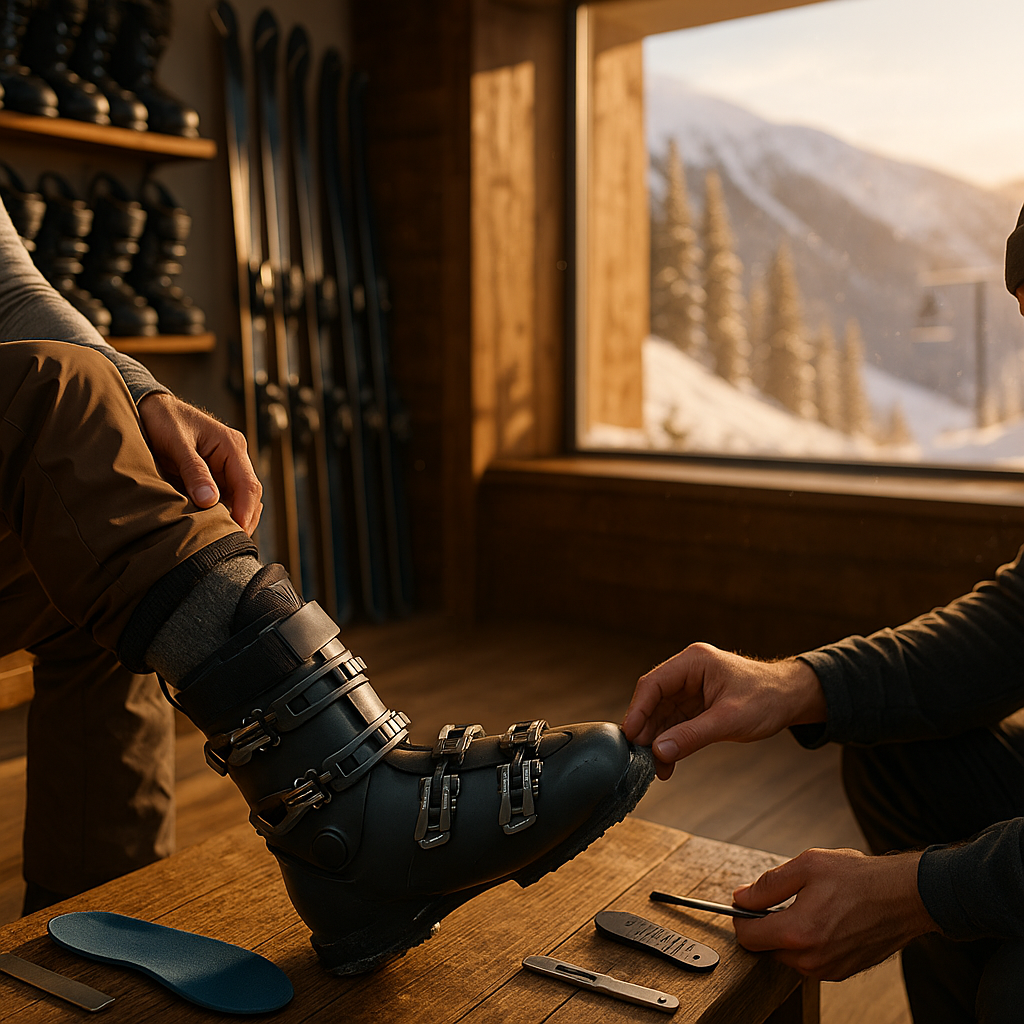
– Heat-moldable liners: Many liners can be heat-molded to your foot for a more precise fit. This can relieve hot spots and improve heel hold.
– Supportive footbeds: A quality insole supports your arch, aligns your stance, and reduces foot fatigue. Even a basic supportive footbed can make a big difference.
– Micro-adjust buckles and power strap: Fine-tune pressure with the “micro” twists on each buckle and finish with a snug power strap for a wrapped, secure feel.
– Cuff alignment (canting): If your knees naturally track inward or outward, some boots allow lateral cuff adjustments to help you stand balanced on your skis.
Ski socks: small change, big comfort
– Wear one thin, ski-specific sock. Thicker isn’t warmer—thick socks can restrict circulation and create painful pressure points.
– Choose merino wool or synthetic; avoid cotton.
– Make sure socks are smooth with no wrinkles.
– Keep socks and liners dry between days for warm, happy feet.
How to buckle boots for best performance
– Start with the ankle buckle (second from the top). This is the key to heel retention.
– Then buckle the lower foot buckles with light-to-moderate tension to avoid cutting off circulation.
– Finish with the top buckle and power strap for support around the shin.
– Stand and flex forward several times to seat your heel. Recheck buckle tension after a few minutes.
Common fit issues and quick fixes
– Numb toes
– Loosen lower buckles slightly, check sock thickness and seams, and make sure you’re not over-tightening the power strap.
– Heel lift
– Tighten the ankle buckle and power strap. A supportive footbed can help lock the heel down.
– Instep pressure
– Loosen the middle buckle or adjust the buckle ladder position. Consider a boot with more instep height.
– Shin bang
– Make sure the power strap is snug high on the shin. Flex actively into the tongue. A supportive footbed can reduce forward slide.
– Calf bite
– Loosen the top buckle slightly, lower the power strap, or consider a boot with a lower cuff or women’s-specific shape.
Break-in tips
– Expect a short break-in: Liners pack out slightly after a few hours.
– If you’re renting for multiple days, check in after day one. Small adjustments can make days two and three even better.
– Warm your boots before putting them on; cold liners feel stiffer and less forgiving.
Renting boots vs. buying: what makes sense?
– Renting is smart if you’re still learning, skiing just a few days a year, or figuring out what flex and fit you like. You can try different models and sizes without the commitment.
– Buying makes sense if you ski frequently and want long-term customization like punches, grinds, or fully custom liners.
Why fit with Alpine Sports Rental in Breckenridge
– Family-owned expertise: Patient, personalized boot fitting from a local team that skis the same terrain you do.
– Two convenient locations: In-and-out access on the north and south ends of Breckenridge, so you can pick up, adjust, or swap with minimal downtime.
– Fast, flexible swaps: If something doesn’t feel right, come in and we’ll find a better fit or make on-the-spot tweaks.
– Quality gear, tuned and ready: You’ll step into boots that are clean, dry, and set up for comfort and control.
How to make your fitting quick and successful
– Know your shoe size and any past fit issues (numb toes, wide forefoot, high instep).
– Bring or wear thin ski socks.
– Tell us your ability level, where you plan to ski, and how fast you like to go.
– Plan 10–15 minutes for a proper boot fit when you pick up your rentals.
FAQs
Will tighter boots keep me warmer?
No. Over-tight boots reduce circulation and make feet colder. Aim for snug, even pressure and one thin ski sock.
Should my toes touch the front?
When you’re standing upright, light contact is good. When you flex forward into ski stance, your toes should pull back slightly.
What if I have wide feet or a high instep?
We carry a range of lasts and boot shapes. Let us know your foot shape and any history of pressure points—there’s almost always a great match.
Can you heat-mold liners or adjust the fit?
We have tools and techniques to fine-tune many rental boots. If a different boot is a better fix, we’ll swap you quickly.
The bottom line
Skiing well starts with boots that fit right. Focus on flex that matches your ability and style, a width/volume that suits your foot, and thoughtful details like supportive footbeds and the right socks. Whether you’re taking your first turns or charging steeps, a properly fitted boot will improve your comfort, control, and confidence.
Ready to get started? Reserve your ski boot and ski package online with Alpine Sports Rental, or stop by either of our two convenient Breckenridge locations on the north and south ends of town for a personalized fit from our family-owned team. We’ll get you dialed and on the mountain fast.
Sorry, the comment form is closed at this time.